Imagine returning to your apartment in the UAE after a long international flight. You don’t need to worry about whether the air conditioning was left on, if the fridge is empty, or if the building’s lobby is secure. Instead, you are greeted by a concierge who knows your name, your luggage is handled by valet, and your residence is maintained to the exacting standards of a five-star hotel.
For a growing segment of high-net-worth buyers, this isn’t a fantasy. It is the new baseline for luxury real estate in the UAE.
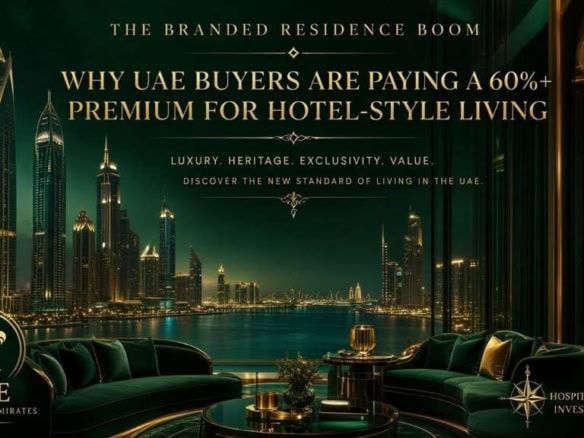
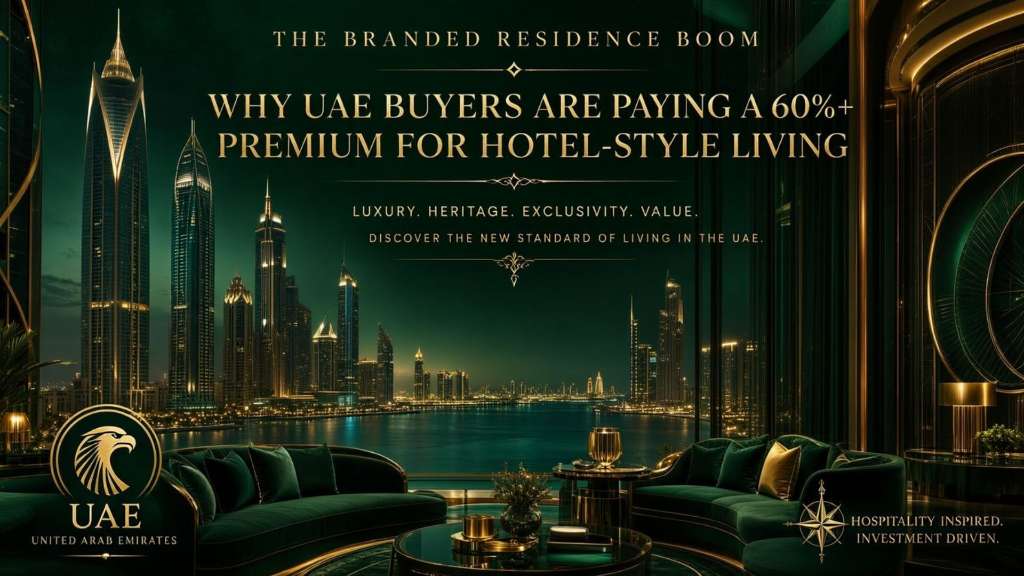
We are witnessing a massive surge in “branded residences”—properties developed in partnership with globally recognized hospitality names like Baccarat, Aman, Four Seasons, and Armani. But this level of curated living comes with a staggering price tag. According to institutional real estate research by CBRE Middle East, branded residences in the UAE have recently commanded an average price premium of over 60% compared to non-branded, ultra-luxury equivalents in the same locations .
Why are savvy, wealthy buyers willingly overpaying to this extent? And more importantly, does this “hotel premium” actually make financial sense when it comes time to sell? Let’s look past the glossy brochures and examine the reality of branded living in 2026.
The Psychology of the Premium: What Are Buyers Actually Paying For?
When you pay a 60% premium for a branded residence, you are not just paying for marble countertops or panoramic views. You are paying for three intangible, yet highly valuable, commodities:
1. The “Lock-and-Leave” Lifestyle
The typical buyer of a branded residence is a global citizen. They may split their time between London, New York, and the UAE. They do not want the hassle of managing a property, dealing with local maintenance crews, or worrying about security while they are away. Branded residences offer seamless, hotel-style property management. You can leave for six months and return to a pristine, climate-controlled home, ready for immediate occupancy.
2. Global Brand Trust
In a market flooded with new, unproven luxury developments, a globally recognized hospitality brand acts as a powerful seal of quality. Buyers know that an Aman or a Four Seasons will not cut corners on construction quality, interior design, or long-term maintenance. The brand’s reputation is on the line, which provides immense peace of mind to international investors who cannot physically monitor the construction process.
3. Exclusive Access and Amenities
Branded residences often grant owners access to the adjacent hotel’s world-class facilities. This means priority bookings at Michelin-starred restaurants, access to exclusive spa treatments, private beach clubs, and dedicated concierge services that can secure impossible-to-get reservations or private jet charters.
The Reality Check: The True Cost of Hotel-Style Living
Before committing to a branded residence, buyers must look beyond the purchase price and confront the ongoing operational costs. The lifestyle is luxurious, but it is not cheap to maintain.
Service Charges Are Significantly Higher In a standard luxury apartment, you pay for basic building maintenance, security, and shared amenities. In a branded residence, your annual service charges cover a hotel-grade staff-to-resident ratio, 24/7 concierge, premium landscaping, high-end lobby furnishings, and rigorous aesthetic standards.
It is not uncommon for service charges in branded developments to be double or even triple those of a comparable non-branded luxury building in the same area. For a large apartment or villa, this can translate to tens of thousands of dirhams in annual fees. Buyers must factor this heavily into their cash flow calculations, especially if they plan to hold the property as a long-term investment.
Strict Usage Rules Living in a branded residence means adhering to the brand’s standards. This can sometimes mean restrictions on short-term rentals (Airbnb), strict rules on renovations or interior modifications, and higher expectations for the upkeep of your private space to ensure it doesn’t detract from the building’s overall prestige.
The Resale Test: Does the “Hotel Premium” Hold Up?
This is the ultimate question for any investor: When I sell, will I get my money back?
Historically, the data suggests a resounding yes. Branded residences have proven to be remarkably resilient, even during broader market corrections.
In the secondary market, the brand name acts as a powerful differentiator. When a buyer is choosing between two luxury apartments in Saadiyat Island or Downtown Dubai, the one with a globally recognized hospitality brand attached to it will almost always command higher interest, faster liquidity, and a higher price per square foot.
The brand essentially future-proofs the asset. It guarantees that the building will be maintained to a high standard for decades, protecting the investment from the wear-and-tear that often plagues unmanaged luxury towers.
The Verdict: Is a Branded Residence Right for You?
Paying a 60% premium is not a decision to be made lightly. It is not the right strategy for an investor looking to maximize every single dirham of rental yield, as the high service charges will eat into monthly cash flow.
However, a branded residence is an exceptional choice if:
- You are a frequent traveler who values hassle-free, secure, and instantly livable accommodations.
- You want hands-off investment management, as many branded residences offer guaranteed rental return programs managed by the hotel operator.
- You prioritize prestige, privacy, and world-class service over minimizing your cost per square foot.
- You are buying for long-term capital preservation, relying on the brand’s reputation to protect the asset’s value in the secondary market.
The Bottom Line
The branded residence boom in the UAE is not a fleeting trend; it is a fundamental shift in how ultra-high-net-worth individuals view real estate. They are no longer just buying a place to sleep. They are buying a seamless, globally recognized lifestyle.
If you have the capital and the lifestyle demands that align with this model, the premium is often worth every dirham. But if you are a hands-on owner who rarely travels and is highly sensitive to annual service fees, a high-quality, non-branded luxury property in a prime community will likely serve you much better.
Know what you are buying, read the fine print on the service charges, and choose the asset that truly fits the way you want to live.
Sources & Further Reading
- CBRE Middle East. Outlook for the Luxury Property Market. Institutional research detailing the sustained price premiums (often exceeding 60%) of branded residences compared to non-branded luxury equivalents in the UAE, driven by international demand for managed assets. cbre.com/middle-east
- The National. Why branded residences are commanding a premium in the UAE property market. Analysis of the lifestyle drivers and long-term value retention of hotel-branded homes. thenationalnews.com
- Gulf News. The rise of branded residences: What buyers need to know about service charges and ROI. Practical insights into the ongoing costs and rental management structures of branded developments. gulfnews.com
- Knight Frank. The Branded Residences Report. Global and regional data on the resilience and liquidity of branded real estate assets in the secondary market. knightfrank.com
Disclaimer: This article is for informational purposes only and does not constitute financial or investment advice. Service charges, rental guarantees, and brand agreements vary significantly by developer and project. Always review the specific Jointly Owned Property (JOP) declarations and management contracts, and consult with a qualified financial advisor before purchasing a branded residence.