Published May 2026 | Reading time: ~18 minutes
If you’ve been watching Abu Dhabi’s property market closely, you’ve probably noticed a shift. It’s no longer just about location, square footage, or developer reputation. Today, buyers and tenants are asking different questions:
“What’s the Estidama rating?” “Does this building have solar readiness?” “How much will my utility bills actually be?”
This isn’t a niche concern anymore. Smart and sustainable living has moved from “nice-to-have” to “must-have” for a growing segment of the UAE property market and Abu Dhabi—with its mandatory Estidama Pearl Rating System, aggressive net-zero commitments, and pioneering projects like Masdar City—is leading that shift.
This guide breaks down what’s actually happening on the ground in 2026: which green features are driving real value, how to separate verified sustainability claims from marketing hype, and what it means if you’re buying, selling, or investing in Abu Dhabi real estate right now.
All insights are grounded in verified data from Abu Dhabi’s Department of Energy, Estidama authorities, Bayut market reports, and independent property analysts.
The Regulatory Driver: Estidama Is Now Mandatory
Let’s start with the foundation. In Abu Dhabi, sustainability isn’t optional—it’s built into the permitting process.
From March 2026, every new commercial building permit in Abu Dhabi requires a minimum 1 Pearl Estidama rating. No Pearl, no permit.
For context:
- Estidama (Arabic for “sustainability”) is Abu Dhabi’s green building framework, launched in 2010 by the Department of Municipalities and Transport
- The Pearl Rating System scores buildings from 1 to 5 Pearls across energy efficiency, water conservation, materials sourcing, indoor environmental quality, and site ecology
- 1 Pearl is the mandatory minimum for all new buildings; government buildings must achieve 2 Pearls; 5 Pearls is the highest achievable rating sasintgroup.com
Why this matters for property values: Buildings following the Pearl Rating System can achieve energy savings of 20–30%, reduce lifecycle costs by up to 33%, and potentially command rental premiums over non-certified peers. In a market where operating costs increasingly influence tenant decisions, that’s not just environmental—it’s financial.
Masdar City: The Proof Point for Sustainable Investment
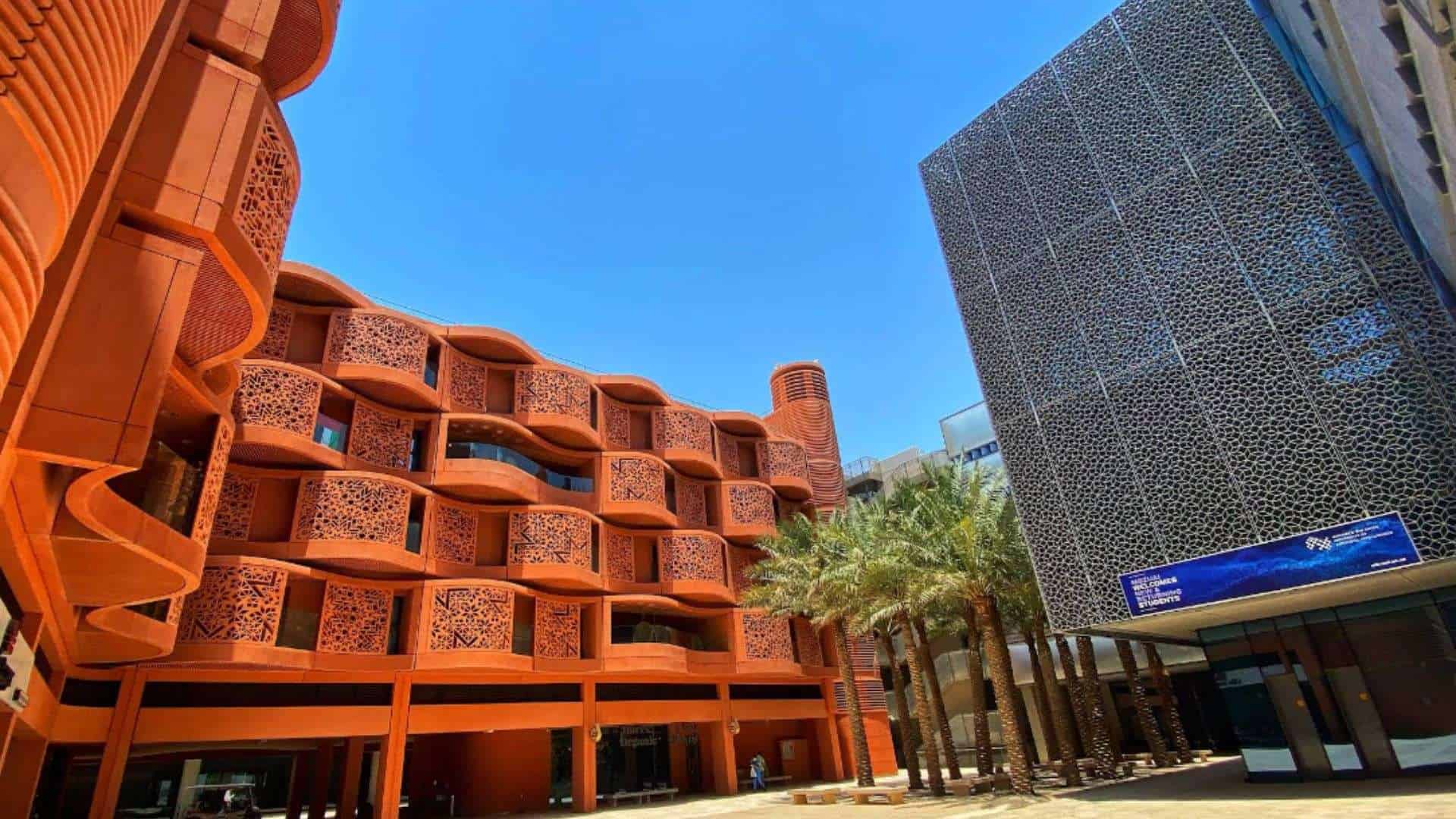
If you want to see sustainability translating into measurable returns, look at Masdar City.
Rental yield data (verified, H1 2025–Q1 2026):
- Apartments: ~8.41% gross yield
- Townhouses/villas (Masdar Gardens): 7.8–9.5% yield, with strong demand from students, researchers, and tech professionals
- Price appreciation: Steady growth, with one-bedroom apartments starting from ~AED 142,500 annually in rent
What’s driving demand?
- Energy efficiency: Buildings designed for passive cooling, high-performance glazing, and district cooling reduce tenant utility bills by 30–40% compared to conventional stock.
- Smart infrastructure: Integrated building management systems, EV charging readiness, and app-controlled utilities appeal to tech-savvy tenants.
- Location + lifestyle: Proximity to Khalifa University, Masdar Institute, and clean-tech employers creates a built-in tenant pool.
Key insight: Masdar City isn’t just a “green experiment.” It’s a functioning community where sustainability features directly support occupancy, retention, and yield stability.
Which Green Features Actually Move the Needle on Value?
Not all “eco-friendly” claims are created equal. Based on market data and tenant surveys, here are the features with the clearest impact on Abu Dhabi property values in 2026:
✅ High-Impact Features (Verified ROI)
| Feature | Impact on Value/Rental Demand | Verification Method |
|---|---|---|
| Estidama 2+ Pearl rating | 3–8% rental premium in Abu Dhabi; stronger tenant retention | Request official Estidama certificate from developer; verify via Department of Municipalities and Transport portal |
| Solar readiness / rooftop PV potential | Lower utility bills (AED 150–300/month savings for villas); appeals to cost-conscious tenants | Confirm structural load capacity, inverter space, and grid-connection approval under Abu Dhabi’s Solar Self-Supply Policy |
| Smart HVAC with occupancy sensors | 20–30% energy savings vs. conventional systems; measurable via utility statements | Request BMS (Building Management System) specs; ask for 12-month utility benchmarking data |
| Water-efficient fixtures + greywater recycling | 25–40% reduction in water bills; increasingly valued as water tariffs rise | Review plumbing specifications; confirm greywater system maintenance plan |
| EV charging infrastructure | Growing tenant expectation; supports future resale value as EV adoption rises | Verify charger type (AC/DC), power rating, and whether costs are bundled or metered separately |
⚠️ Marketing-Heavy, Lower-Impact Claims
| Claim | Reality Check |
|---|---|
| “Eco-friendly materials” | Verify: Are materials locally sourced? Do they have third-party certifications (e.g., Cradle to Cradle, FSC)? |
| “Green landscaping” | Verify: Is irrigation drip-based? Are native, drought-tolerant species used? |
| “Smart home ready” | Verify: Is infrastructure pre-wired? Are systems interoperable (e.g., Matter protocol)? Or just marketing language? |
| “Net-zero ready” | Verify: Does the building have a documented decarbonization pathway? Or is this aspirational language? |
Rule of thumb: If a sustainability claim can’t be backed by a certificate, utility statement, or third-party audit, treat it as marketing—not a value driver.
Abu Dhabi’s Broader Sustainability Push: Why Timing Matters Now
Several policy shifts in 2025–2026 are accelerating the value of green features:
1. Solar Self-Supply Policy Expansion (March 2026)
Abu Dhabi’s Department of Energy launched Phase 2 of its Solar Energy Self-Supply Policy, extending rooftop solar + battery storage eligibility to villa owners and residential buildings. This means:
- Homeowners can now generate, store, and use their own solar power
- Excess energy can be fed back to the grid under a simplified regulatory framework www.doe.gov.ae
- Early adopters gain a competitive edge in rental markets where utility costs are a key tenant consideration
2. Water and Energy Resilience Framework (June 2026)
The Abu Dhabi Department of Energy unveiled a new framework to strengthen water and energy systems against climate volatility. For property owners, this signals:
- Future regulations may require higher efficiency standards for existing buildings
- Proactive upgrades now could avoid costly retrofits later
- Buildings with resilient infrastructure (e.g., water recycling, backup power) may see reduced insurance premiums
3. UAE Net Zero 2050 Strategy
The UAE’s commitment to net-zero emissions by 2050 is driving regulatory evolution across real estate
u.ae. While full implementation is long-term, early signals include:
- Tighter procurement rules for government buildings to curb energy use
- Growing investor preference for ESG-compliant assets
- Potential “brown discount” for inefficient buildings as disclosure requirements expand
How to Verify Developer Sustainability Claims: A Practical Checklist
Before committing capital, run through this due diligence framework:
✅ Request the Estidama certificate
- Every certified building receives an official Pearl Rating certificate from the Department of Municipalities and Transport. Ask to see it—and verify the rating level (1–5 Pearls) and scope (design vs. as-built).
✅ Ask for utility benchmarking data
- Reputable developers of sustainable projects will share 12-month utility consumption data (kWh/m², liters/person/day) for comparable units. If they can’t, ask why.
✅ Confirm smart system interoperability
- “Smart home ready” is meaningless if systems can’t communicate. Ask: Are devices Matter-compatible? Is there a unified app? Can tenants control HVAC, lighting, and security from one interface?
✅ Review maintenance plans for green systems
- Solar inverters, greywater pumps, and BMS software require ongoing maintenance. Ask: Who is responsible? What’s the annual cost? Is it bundled into service charges?
✅ Check for third-party validation
- Beyond Estidama, has the project pursued LEED, BREEAM, or GSAS certification? Third-party audits add credibility—and often correlate with stronger performance
✅ Talk to existing tenants
- If possible, speak with current residents about actual utility bills, system reliability, and responsiveness to maintenance requests. Real-world experience is better than brochures.
Investment Implications: What This Means for Your Strategy
If You’re Buying to Rent
- Prioritize Estidama 2+ Pearl properties: The rental premium (3–8%) and lower vacancy risk can offset slightly higher acquisition costs
- Factor in utility savings: A unit that saves AED 200/month on bills is effectively “cheaper” to a tenant, even if rent is marginally higher.
- Target tech-forward tenants: Young professionals, researchers, and sustainability-conscious families actively seek smart, efficient homes—and often stay longer.
If You’re Buying for Capital Appreciation
- Focus on future-proofing: Buildings designed for solar retrofit, EV charging, and water recycling are better positioned for regulatory changes and shifting buyer preferences.
- Watch supply pipelines: Areas with high concentrations of Estidama-certified stock (e.g., Masdar City, Al Reem Island) may see stronger demand as green awareness grows.
- Consider hold period: Sustainability premiums may compound over time as disclosure requirements tighten and tenant expectations evolve.
If You’re Selling or Refinancing
- Highlight verified metrics: Don’t just say “eco-friendly.” Share the Estidama rating, estimated annual utility savings, and any smart system certifications.
- Prepare documentation: Have utility statements, maintenance records, and system warranties ready for buyer due diligence.
- Price strategically: Green features support value, but overpricing based on unverified claims can deter serious buyers.
The Bottom Line: Sustainability Is Becoming a Core Value Driver
Abu Dhabi’s property market in 2026 isn’t rejecting sustainability—it’s rewarding it. But the key word is verified.
Features like Estidama certification, solar readiness, smart HVAC, and water efficiency are moving from “differentiators” to “baseline expectations” for a growing segment of buyers and tenants. And as Abu Dhabi’s regulatory framework tightens and tenant awareness grows, that trend will only accelerate.
The smartest strategy isn’t to chase every green buzzword. It’s to:
- Focus on features with measurable ROI (energy savings, rental premiums, retention)
- Verify claims with documentation (certificates, utility data, third-party audits)
- Align with Abu Dhabi’s policy direction (net-zero, water resilience, solar adoption)
As one industry analysis notes: “In 2026, Abu Dhabi’s property market is being shaped less by speculative cycles and more by demographic expansion, infrastructure connectivity, and long-term value creation”
Sustainability isn’t just good for the planet. When done right—and verified properly—it’s good for your portfolio too.
Sources & Further Reading
- Bayut. “Estidama Abu Dhabi Guide: Rating System, Goals & More.” December 2025. www.bayut.com
- Scribd. “Estidama Pearl Rating System Version 2.0 Draft.” www.scribd.com
- Wikipedia. “Pearl Rating System (Abu Dhabi).” en.wikipedia.org
- Arabian Business. “Abu Dhabi Real Estate: Rents climb by up to 68%, yields top 9%.” July 2025. www.arabianbusiness.com
- The Sustainable Times. “Aldar Appointed Exclusive Real Estate Partner for Abu Dhabi Sustainability Week 2026.” January 2026. thesustainabletimes.com
- PwC. “Emerging Trends in Real Estate: Global 2026.” www.pwc.com
- Abu Dhabi Department of Energy. “Abu Dhabi Energy Outlook 2050.” January 2024. www.doe.gov.ae
- UAE Government Portal. “The UAE’s Net Zero 2050 Strategy.” October 2025. u.ae
- World Green Building Council. “Governmental actions in support of the net zero agenda.” November 2023. worldgbc.org
- Arabian Business. “Abu Dhabi announces new procurement policy to curb energy use.” January 2026. www.arabianbusiness.com
- Longbridge. “UAE Launches Government Building Energy-Saving and Water Conservation Initiative.” March 2026. longbridge.com
- Abu Dhabi Quality and Conformity Council. “Abu Dhabi Guideline: Development And Organization of Industrial Lands.” www.qcc.gov.ae
- Abu Dhabi Department of Energy. “Guide to Water Supply Regulations 2024.” January 2024. www.doe.gov.ae
- GCC Business News. “Abu Dhabi DoE unveils Water and Energy Resilience Framework.” June 2026. www.gccbusinessnews.com
- Abu Dhabi Media Office. “Abu Dhabi Department of Energy launches 2nd phase of Solar Energy Self-Supply Policy.” March 2026. www.mediaoffice.abudhabi
- Abu Dhabi Department of Energy. “Abu Dhabi Department of Energy launches second phase of Solar Energy Self-Supply Policy.” March 2026. www.doe.gov.ae
- ResearchGate. “Sustainable energy adoption in UAE homes (villas and apartments).” January 2026. ResearchGate
Disclaimer: This article is for informational purposes only and does not constitute financial, legal, or investment advice. Property investments involve risk; past performance is not indicative of future results. Always verify current regulations, certifications, and market data directly with official sources (Abu Dhabi Department of Energy, Department of Municipalities and Transport, Estidama portal) and consult licensed professionals before making decisions.