For an ambitious Food & Beverage (F&B) founder in the UAE, the traditional dream has always been the same: secure a prime storefront in a super-regional mega-mall like The Dubai Mall or Mall of the Emirates. The footfall is massive, the prestige is undeniable, and the branding opportunity seems limitless.
However, the reality of this dream is increasingly becoming a financial nightmare for independent cafes, artisanal bakeries, and emerging F&B concepts. Exorbitant rents, rigid fit-out requirements, and intense competition are crushing profit margins before a single dish is served.
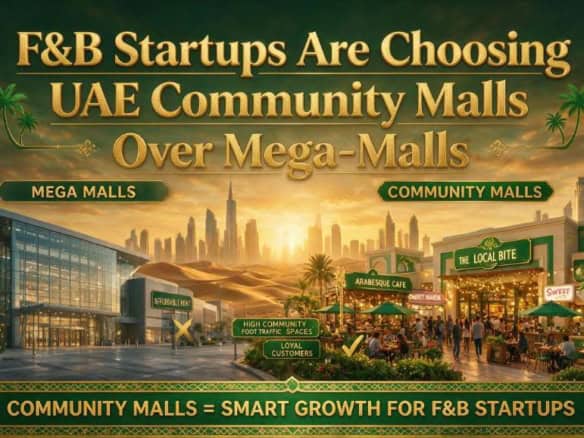
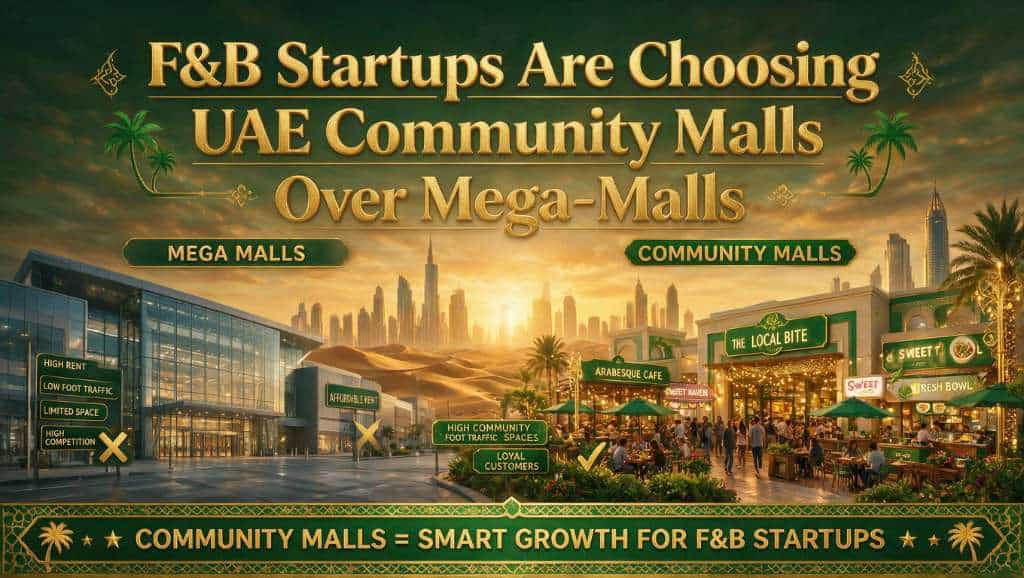
In response, a major strategic shift is underway. F&B startups and boutique retail brands are increasingly bypassing mega-malls in favor of neighborhood and community malls. This is not a compromise; it is a calculated, data-driven pivot toward sustainable growth, loyal local footfall, and manageable overheads.
Here is a detailed, fact-based look at why the neighborhood retail boom is redefining the UAE’s F&B landscape in 2026.
The Financial Reality: The Cost of Prime Mega-Mall Real Estate
The barrier to entry for mega-malls has never been higher. According to the latest global retail data from Cushman & Wakefield, Dubai Mall’s Fashion Avenue now ranks as the 11th most expensive retail location in the world.
For an F&B startup, the numbers are stark. The combination of high base rent, hefty service charges, and mandatory premium fit-outs creates a financial burden that requires massive, consistent daily revenue just to break even.
Table 1: Mega-Mall vs. Community Mall Retail Metrics (2025/2026)
| Metric | Mega-Mall (e.g., Dubai Mall Fashion Avenue) | Community / Neighborhood Mall (e.g., Dubai Investment Park, Town Square, Yas Acres) |
| Global Cost Ranking | 11th most expensive retail location globally. | Not ranked in global luxury indices; designed for accessibility and local convenience. |
| Year-on-Year Rent Growth | Increased by 9% year-on-year. | Increased by approximately 9% in Abu Dhabi community malls, but starting from a significantly lower baseline. |
| Estimated Annual Rent | Approximately AED 1,904 per sq. ft. (approx. $518 USD per sq. ft.). | Approximately AED 150 to AED 250 per sq. ft. (e.g., AED 165,400 per year for an 827 sq. ft. unit in DIP). |
| Fit-Out Requirements | Extremely high. Strict brand guidelines and luxury finishes are mandated by landlords. | Moderate. Flexible layouts are common, with many units available as semi-fitted “pocket shops.” |
| Customer Profile | International tourists, luxury shoppers, and transient one-time visitors. | Local residents, families, and highly loyal repeat weekly visitors. |
| Super-Regional Rent Trend | Dubai super-regional mall rents rose by 14.9% year-on-year. | Community mall rents remain highly competitive, with landlords prioritizing long-term tenant retention. |
The Strategic Shift: Why Community Malls Are Winning for F&B
The decision to lease in a community mall is driven by several operational and financial advantages that directly address the pain points of F&B startups.
1. Predictable, High-Intent Footfall
Mega-malls rely on millions of transient visitors, many of whom are tourists who may never return. Community malls, however, are embedded within master-planned residential neighborhoods. The footfall consists of residents who visit the mall multiple times a week for groceries, school runs, and casual dining. For an F&B brand, this translates to predictable, recurring revenue and a built-in customer base that is highly responsive to local community marketing.
2. Drastically Lower Capital Expenditure (CapEx)
Securing a 1,000 sq. ft. space in a prime mega-mall can require a fit-out budget exceeding AED 500,000 due to strict landlord specifications and premium material requirements. In contrast, community malls frequently offer semi-fitted units. A standard 800 sq. ft. unit in a community hub might cost a fraction of the fit-out price, allowing startups to allocate more capital toward quality ingredients, staff training, and initial marketing rather than sunk construction costs.
3. Agile Lease Terms and Lower Risk
Mega-mall leases are notoriously rigid, often demanding 3- to 5-year commitments with aggressive annual rent escalations. Community mall landlords are generally more flexible, frequently offering shorter lease terms or turnover-based rent models (a lower base rent plus a percentage of monthly sales). This agility is critical for F&B startups that need 12 to 18 months to build brand recognition and stabilize operations.
Market Context: The 2026 Community Retail Expansion
The shift toward neighborhood retail is not just a tenant preference; it is being actively supported by developers and macroeconomic market dynamics. The UAE retail sector is expanding in all directions, with a pronounced focus on localized, experience-led destinations.
- New Supply Pipeline: By 2026, seven new malls and large-scale retail expansions are set to open across Dubai and the wider UAE, with a heavy emphasis on community-focused lifestyle hubs rather than destination tourism.
- Dedicated Community Space: Approximately 776,000 sq. ft. of new community retail space is scheduled to be delivered by 2026, specifically designed to serve residential catchments.
- Sector Growth: The broader UAE retail industry is projected to grow at a Compounded Annual Growth Rate (CAGR) of 5.48% through 2028, driven largely by this decentralized, neighborhood-level expansion.
Developers are intentionally designing these community malls as “third places”—extensions of the residents’ living rooms, heavily anchored by F&B concepts, specialty coffee shops, and boutique wellness services.
A Strategic Checklist for F&B Founders
If you are evaluating a retail space for your F&B concept in 2026, use this checklist to ensure the location aligns with your business model:
- Analyze the Catchment Demographics: Does the surrounding residential area match your target audience (e.g., young families, health-conscious professionals, or students)?
- Calculate the True Occupancy Cost: Do not just look at the base rent. Factor in service charges, marketing levies, and the estimated fit-out cost per square foot.
- Evaluate Parking and Accessibility: Community mall success relies on convenience. Ensure there is ample, free, or low-cost parking for residents doing a quick grocery and coffee run.
- Review the Tenant Mix: A successful community mall has a synergistic tenant mix. Being located next to a popular supermarket, a gym, or a family entertainment center will naturally drive spillover traffic to your F&B outlet.
- Negotiate Flexibility: Ask the landlord about turnover-rent options or fit-out contribution allowances, which are much more commonly negotiated in community centers than in mega-malls.
The Bottom Line
The era of assuming that a mega-mall address guarantees F&B success is over. For independent cafes, niche restaurants, and emerging food brands, the exorbitant costs and rigid structures of super-regional malls present an unsustainable risk.
The neighborhood retail boom offers a smarter, more sustainable alternative. By embedding themselves in community malls, F&B startups can achieve lower overheads, build genuine loyalty with local residents, and scale their operations at a manageable pace. In the current UAE market, the most profitable square footage isn’t always the most expensive; it is the one where your target customer already lives.
Sources & Further Reading
- Cushman & Wakefield Core. Dubai Annual Retail Market Update 2025/2026. Authoritative market analysis detailing the 9% year-on-year rent increase in Dubai Mall’s Fashion Avenue, its ranking as the 11th most expensive retail location globally, and the broader expansion of community retail.
https://www.cushwake.ae/en/marketbeats/dubai-annual-retail-market-update-20252026 - Cushman & Wakefield. Main Streets Across the World Report 2025. Global retail data confirming the rental price per square foot for Dubai Mall (Fashion Avenue) at approximately $518 USD (AED 1,904) and its growth trajectory.
https://digital.cushmanwakefield.com/mainstreets-11-2025-global-central-en-content-retail - CRC Property. Top Areas to Rent Retail Space in Dubai (2025). Commercial leasing insights providing verified baseline rental figures for community retail spaces, such as AED 165,400 annually for an 827 sq. ft. unit in Dubai Investment Park.
https://www.crcproperty.com/en/blog/commercial-leasing/top-areas-to-rent-a-warehouse-in-dubai-2025 - Ken Research. Global Shopping Centers Market Share, Companies & Forecast. Industry report highlighting the UAE retail industry’s projected Compounded Annual Growth Rate (CAGR) of 5.48% through 2028, driven by localized retail expansion.
https://www.kenresearch.com/industry-reports/global-shopping-centers-market
Disclaimer: This article is for informational purposes only and does not constitute commercial real estate, legal, or financial advice. Retail lease rates, service charges, and market conditions are subject to change. Always consult with a qualified commercial real estate advisor and review specific Jointly Owned Property (JOP) regulations before signing a retail tenancy contract in the UAE.